
Forsyth Futures Blog
Follow Our Common Thread on Substack.
Looking for more frequent blogs and stories from across Forsyth County? Our Communications Director also leads support for Our Common Thread, Thriving Together’s Substack, which features regular writing about the systems change work happening across Forsyth County.

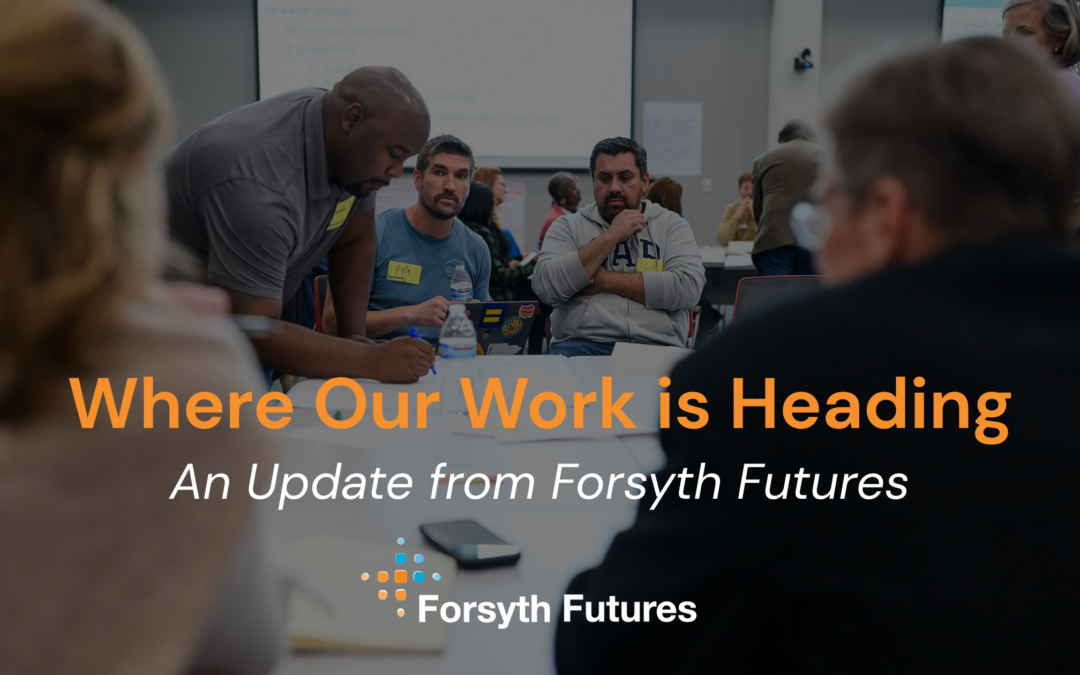
Where Our Work Is Heading: An Update from Forsyth Futures
It’s been a while since our last update, and we owe you a real one. A lot has been happening at Forsyth Futures, from expanding our role as a backbone organization for Thriving Together to welcoming the Data Sharing Project into our team and strengthening the work that supports community-driven change across Forsyth County.
Read our latest quarterly update to see what’s changed, where our work is headed, and explore our newest reports and publications for a deeper look at the data and research supporting this work.
Through a Gender Lens 2026: the Economic Security of Women and Girls in Forsyth County
Through a Gender Lens 2026: The Economic Security of Women and Girls in Forsyth County was produced using a community-based participatory research (CBPR) framework that centers lived experience alongside data. This report, commissioned by The Women’s Fund of Winston-Salem, was a collaboration between Forsyth Futures, Action4Equity, and a cohort of women and people with lived experiences aligned with womanhood from across Winston-Salem and Forsyth County. This report was shaped from start to finish by that cohort, who helped define what thriving means, identified the issues that mattered most, and interpreted the findings alongside researchers.
The Intersectionality of Black Life and Being: a Community-Based Research Pilot Project
The “Intersectionality of Black Life and Being” report was produced with a community-based research (CBR) framework that departs Forsyth Futures’ traditional research approach. This report, commissioned by the Black Philanthropy Initiative of the Winston-Salem Foundation, was a collaboration among Action4Equity, Forsyth Futures, and a dedicated group of research participants from the Black community in Winston-Salem and Forsyth County. Unlike conventional research, this community-based approach actively involved Black people from the local community as co-leaders and decision-makers, ensuring mutual ownership over many aspects of the research process.
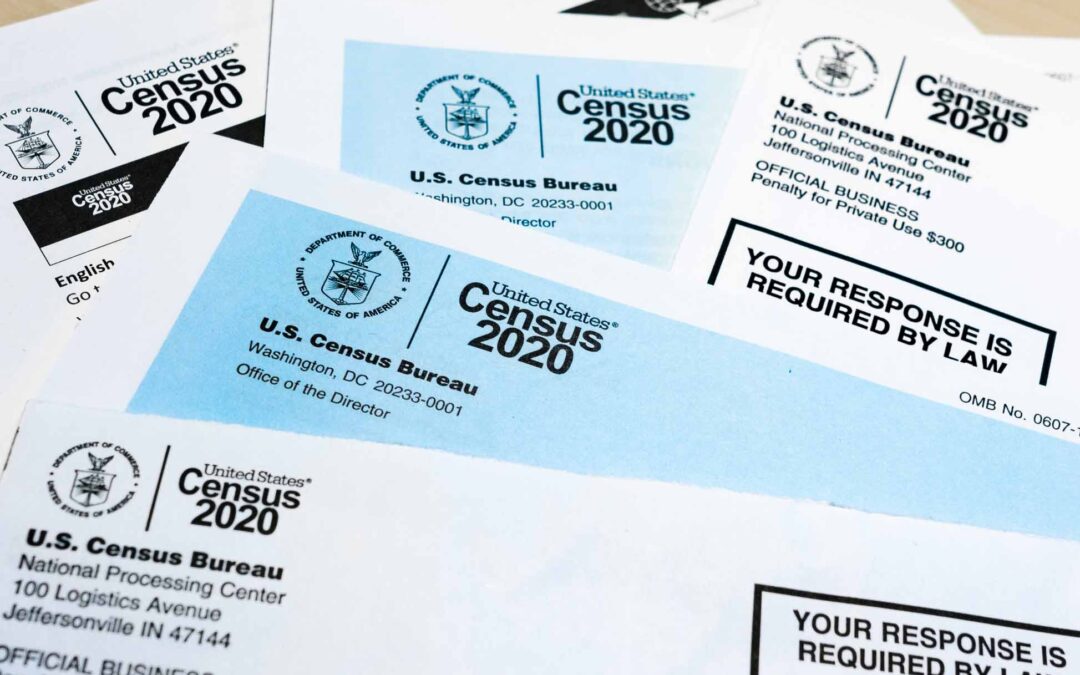
Disruptions and Remedies to the 2020 American Community Survey 1-Year: What to Know
From March through September, 2020, the Census Bureau’s typical data collection operations were disrupted by the COVID-19 pandemic, leading to the lowest household response rate in the survey’s history. As a consequence, some specific individual characteristics (such as marital status or educational attainment) produced “unexpected trends” and/or were considerably different from the same measurement published in other data sources. This post covers what happened, the Census Bureau’s response, and Forsyth Future’s guidance in how to navigate the 2020 ACS 1-year data moving forward.

Which groups lost employment income during the pandemic?
In our last series post we looked at how the COVID-19 pandemic had affected labor force participation and unemployment in Forsyth County and reported on recent changes in employment by industry. This post digs deeper into the question of ‘who’ by exploring which groups in our community have been most impacted by recent economic shifts and have experienced the worst of the pandemic’s effects. The data in this post looks at the US as a whole; it was produced using the US Census Bureau’s Household Pulse Survey.

The Trauma Resilient Community Institutional Assessment
Trauma happens when the internal and external resources of individuals or communities are not enough to cope with an external threat, and it is a kind of adversity that has a lasting impact on those individuals or communities. Because people’s experiences build and impact the brain’s architecture, trauma responses trigger survival mode reactions such as fight, flight, freezing, or collapsing. There are different types of trauma, including racial and historical trauma, that can impact people and communities in different ways.

The COVID-19 Pandemic has Disrupted Critical Sources of Local Data
Forsyth County, North Carolina | December, 2021The impacts of the COVID-19 pandemic on our community and our broader society have been widespread, including specific federal sources of local data on which our community relies, like the US Census and the American...
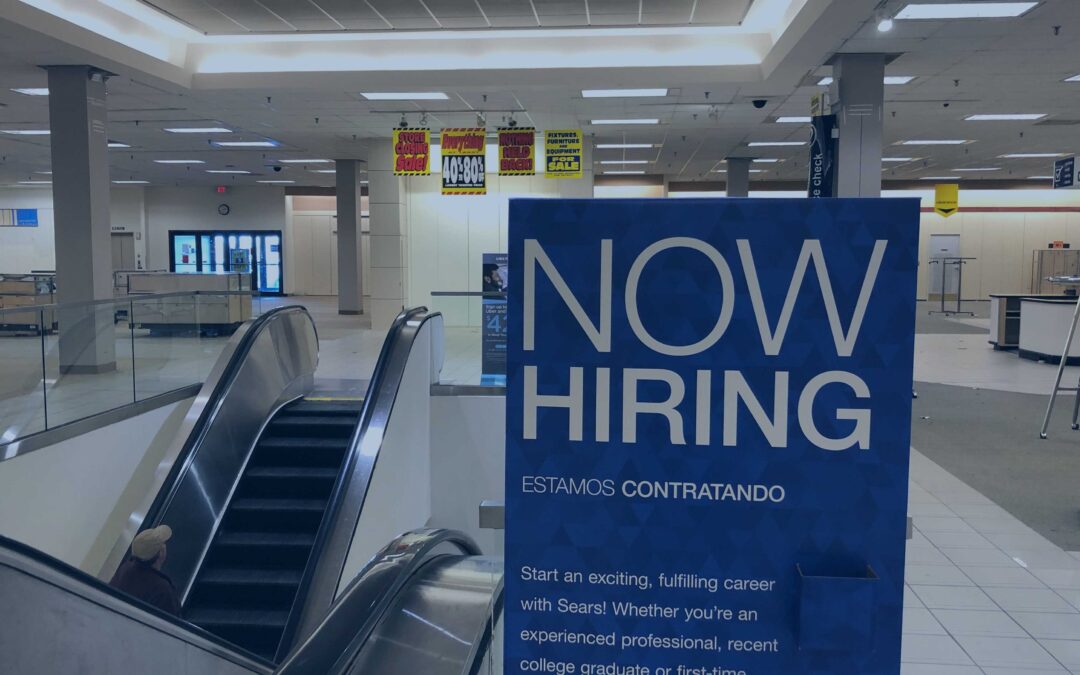
A Labor Force in Flux, Changes in Employment by Industry in Forsyth County
Forsyth County, North Carolina | Decemer, 2021Today, national headlines such as ‘Businesses luring employees along with customers this season’ have become widespread and in Forsyth County, ‘Now Hiring’ signs can be seen in many of Forsyth County’s office windows...

Forsyth Futures’ 2020-21 Year-in-Review
August, 2021Today, we are excited to share about some of the important work that Forsyth Futures has been a part of recently. Below, we have highlighted four key areas of focus for the upcoming year that will continue to move us forward as we study the community and...